

Balayage for Gray Hair Tacoma: A Planning Guide
Can balayage work with gray hair? Yes, balayage can complement gray hair when the color plan works with your natural silver pattern instead of treating every strand as something to hide. If you are considering balayage for gray hair in Tacoma, the right approach depends on how much gray you have, where it appears, your current color history, and how much maintenance you want.
Balayage for Gray Hair Tacoma: Can It Blend Gray?
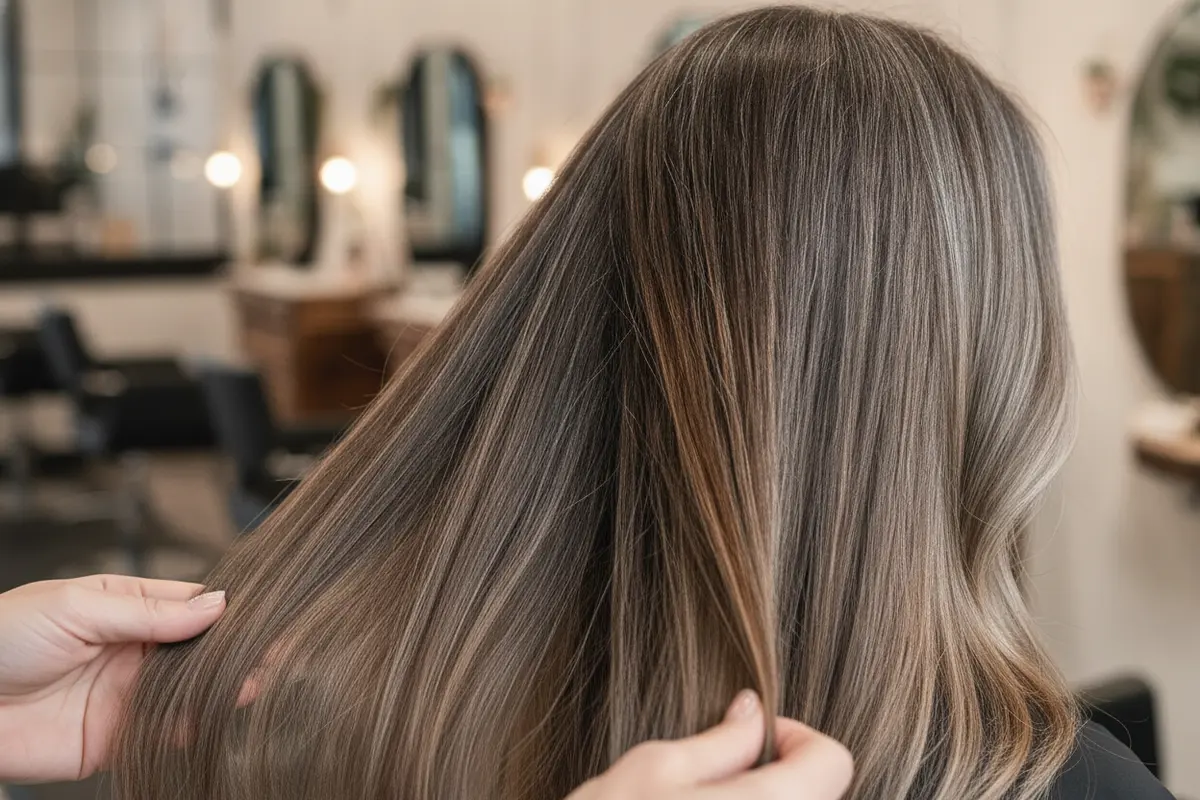
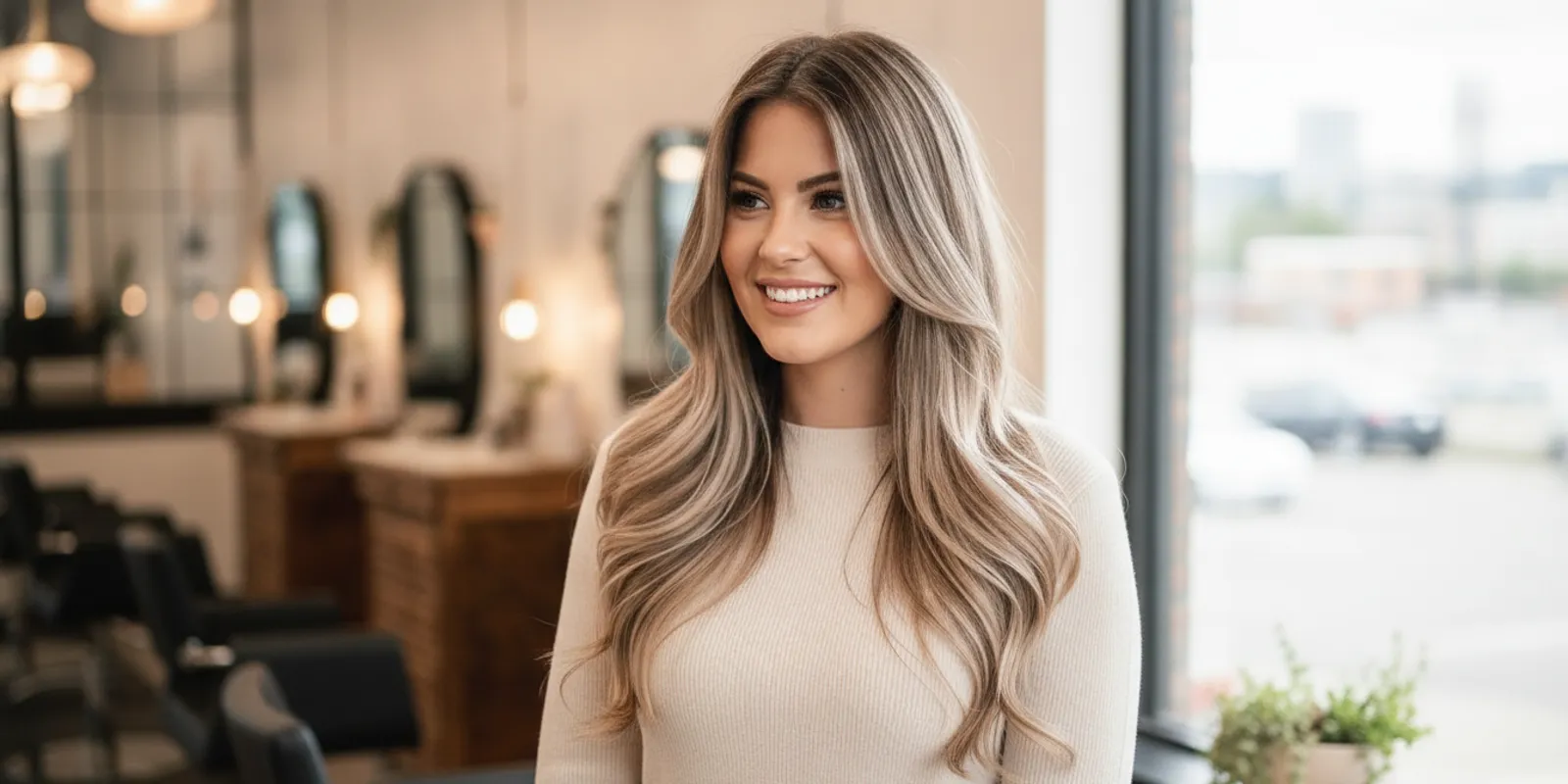
It can. Balayage places lighter color through selected sections of hair, creating dimension rather than applying one solid shade from roots to ends. A colorist may use that contrast to make silver strands feel more integrated with the rest of your color. The goal is usually a softer, dimensional look, not a promise that balayage will cover every gray hair.
That distinction matters. Gray hair may be scattered throughout, concentrated around the hairline, or more visible at the part. A balayage plan can be shaped around those patterns, but it may not provide the same opaque root coverage as a traditional color service. Your colorist should first clarify whether you want to disguise gray, soften the contrast, or celebrate your silver while adding brightness.
Gray hair appears as hair follicles lose their ability to make melanin, though the exact reasons for that change are not fully clear, according to MedlinePlus Genetics. For a color appointment, the practical question is how your natural gray is distributed and how it interacts with your existing color, not why it appeared.
Which gray-hair color approach fits your goal?
There is no single best service for everyone. Start with what you want to see at the roots and how often you are comfortable returning for color. These approaches describe broad goals; your stylist may recommend a customized combination after seeing your hair in person.
Approach | What it aims to do | May suit you if... | What to keep in mind |
Balayage or dimensional highlights | Add lighter pieces and soften contrast among gray, natural color, and previously colored hair. | You want movement and a blended effect rather than uniform root coverage. | It may not conceal every gray strand; the result depends on placement, contrast, and starting color. |
Gray blending with a softer root plan | Reduce the visual line between new growth and the rest of your color. | You want a more gradual grow-out and are open to seeing some natural gray. | Your colorist needs to assess your gray pattern and color history to decide what is achievable. |
Root coverage or all-over color | Make the root area or overall shade look more uniform. | Consistent gray coverage is your main priority. | New growth becomes visible over time, so ask about the upkeep rhythm before choosing. |
Growing out your natural gray | Transition away from regular color and let more silver come through. | You want to reduce ongoing color coverage and are comfortable with a transition period. | A transition plan may involve more than one appointment and depends on existing color. |
Balayage is most compelling when you want visible dimension and a softer transition, not when you expect it to act like permanent root coverage. If full coverage is your priority, tell your colorist before discussing placement. You can also review Dolce Salon's color services and options to understand the broader menu before your consultation.
Balayage for Gray Hair Tacoma: What Affects the Result?
Your gray pattern
A few silver strands in one area call for a different plan than a high percentage of gray throughout. Gray around the hairline or part may remain noticeable even after lighter pieces are added elsewhere. The colorist can help you decide whether to place brightness near those areas, leave some gray visible, or consider a different root service.
Your starting shade and color history
Natural brunette, previously colored brunette, and lightened hair do not respond in the same way. Existing color can affect how much lift is practical and whether the desired tone can be reached in one visit. Bring a clear account of past color, at-home products, and any recent chemical services. If you are unsure what was used, say so; an honest history helps the stylist plan conservatively.
Lightening and other chemical services can affect the hair shaft and scalp. A review in PubMed Central discusses damage associated with dyeing or perming hair, which is one reason a colorist should consider the condition of your hair and your chemical history rather than choosing a look from a photo alone. You can read the review on hair and scalp effects of dyeing and perming.
Your preferred maintenance level
Some clients want a polished root with consistent coverage. Others prefer a more lived-in result that does not make a sharp line their main concern. Neither goal is better; they simply lead to different service plans. Think about how you feel when new growth appears, how often you want salon appointments, and whether you are open to seeing your silver between visits.
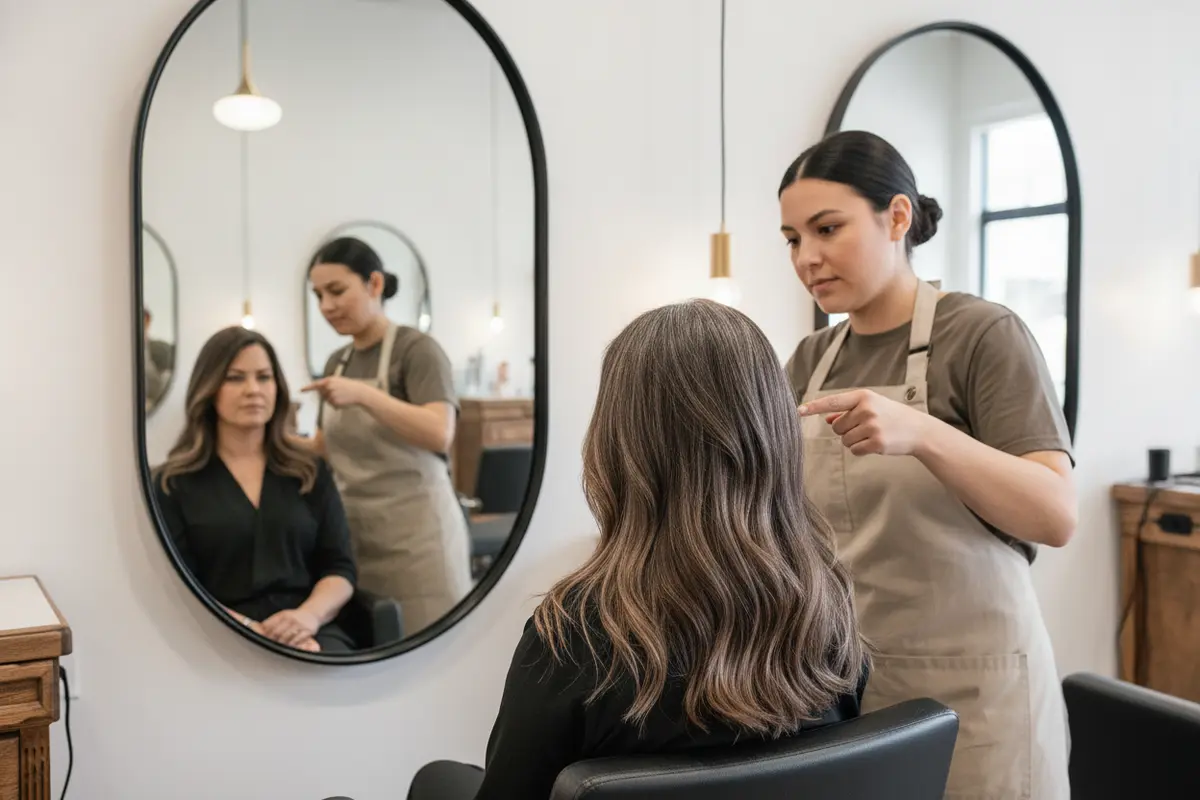
What happens during a gray balayage consultation?
A thoughtful consultation turns a broad idea into a realistic plan. At Dolce Salon, our consultation-first approach helps us understand the result you want and talk honestly about your hair's potential. For a new color client, the service plan is organized around one of five session categories: Mini, Basic, Maintenance, Trademark, or High Maintenance. Your stylist can help identify the right category after discussing the work involved.
- Describe your goal.
Tell your stylist whether you want to camouflage gray, soften the contrast, add brightness, or transition toward natural silver. "I want it blended" can mean several different things, so examples and specifics help.
- Show your current hair in natural light.
Bring inspiration photos, but also show images of your own hair if its color changes under different lighting. Point out areas where gray feels most noticeable to you.
- Share your color history.
Mention salon color, box color, lightener, gloss, henna, or other chemical services as accurately as you can. This is not about judgment; it helps the stylist evaluate options and avoid unrealistic promises.
- Talk through upkeep and budget preferences.
Ask what the first appointment may involve, how the look may change as roots grow, and what future visits could maintain it. Dolce uses a tiered stylist system, so service pricing depends on the selected service and stylist level; ask for the applicable details before proceeding.
- Agree on a realistic first step.
If your goal requires more work than can be responsibly completed in one appointment, your stylist can discuss a phased plan rather than rushing toward a picture-perfect result.
For more about arriving as a new client, see our new-client information. It can help you prepare questions and understand how to start a personalized service conversation.
How often will balayage need upkeep?
There is no universal appointment interval for gray balayage. Timing depends on how quickly your hair grows, how much gray you have, where the color is placed, and how much contrast you prefer at the root. A softer blend may feel acceptable as it grows, while someone who wants consistent coverage may prefer more regular root appointments.
During the consultation, ask your colorist to describe what you will see several weeks after the visit, not only how the fresh color will look on day one. For example, ask whether the natural gray at your part will remain visible, whether the transition will look softer or simply lighter, and which areas might need attention first. These details make it easier to decide if the upkeep matches your routine. If you usually wait longer between salon visits, say so before the placement is planned.
Also ask whether your first visit is intended as a complete result or the beginning of a gradual transition. A larger change from dark, previously colored hair may require a more careful, staged approach. A smaller adjustment to natural hair may have a different plan. Your stylist can explain the sequence, likely maintenance choices, and how to reassess the result at later appointments without promising an exact outcome in advance.
Maintenance can also mean more than repeating the same lightening service. Your stylist might recommend a refresh for tone or brightness, a root service, or a period of letting the hair rest. Ask which parts of the plan are optional and which are needed to maintain your chosen look. Toner and root shadow are separate from color-session pricing at Dolce, so ask how any selected add-ons are handled when reviewing your plan.
Between visits, follow the care guidance your colorist gives you for your hair and color. Avoid assuming that every gray-blending plan needs the same shampoo, styling routine, or appointment schedule. If your hair feels different after a service, raise that at your next consultation so the plan can be adjusted.
When might balayage not be the right fit?
Balayage may not match your expectations if you want every gray hair covered from root to end, a uniform result in one appointment regardless of your starting color, or no visible root change over time. In those cases, ask about other color options before committing. You may still decide on balayage for dimension, but the service should be part of a plan that is clear about what will remain visible.
It may also be worth slowing down if your hair has a complicated color history or its condition needs to be assessed. The most useful consultation is an honest one: share your goal, listen to the options, and decide together what is realistic for your hair. Our guide to what balayage is offers additional background if you are still comparing techniques.
Choosing a Tacoma salon for gray blending
Look for a stylist who asks about your color history, explains the difference between blending and coverage, and discusses upkeep before starting. Bring reference photos, but expect the recommendation to reflect your own hair rather than reproduce another person's result exactly. A good plan should leave you understanding what the first visit can accomplish, what it cannot, and how you can maintain the outcome.
Dolce Salon is on Tacoma's 6th Avenue, with accessible parking nearby. Our team uses a tiered stylist system and takes a consultation-first approach, so you can discuss your goals and the appropriate color session before deciding. Our owner and Master Stylist, Heather Trout, is a Gene Juarez Academy graduate with more than 15 years of experience and training across professional color lines. Learn more about our salon and stylist team, or see directions and parking information before your visit.
Frequently asked questions
Will balayage completely cover gray hair?
Not necessarily. Balayage adds selected lighter pieces and dimension; it is not automatically the same as opaque root coverage. Tell your stylist how much gray you want hidden so you can compare suitable options.
Can I keep my natural gray and still get balayage?
Often, the goal can be to work with the silver rather than cover it. A colorist can discuss where added brightness may complement your natural gray and what parts of your hair may remain unchanged.
Is balayage lower maintenance than gray coverage?
It may feel less demanding for some people because the goal can be a softer grow-out, but maintenance varies with placement, contrast, growth, and your preference. Ask what the plan will look like as your roots return.
What should I bring to a first appointment?
Bring inspiration photos, a clear account of your color and chemical-service history, and questions about coverage, upkeep, and cost. Be ready to describe what you like and dislike about your current gray pattern.
Ready to plan your gray-blending color?
Balayage can be a beautiful way to add dimension alongside gray, as long as the goal is realistic for your hair and your preferred maintenance routine. A consultation with our Tacoma team is the place to compare blending and coverage options and decide on a plan that feels right for you.
Comments