

How can I protect colored hair when I swim: A Simple Decision Guide
Hair color after swimming care Tacoma swimmers can use starts with a simple idea: limit how long pool or salt water stays on your hair, then rinse and condition as soon as you can. Swimming does not have to mean giving up color, but chlorine, salt, sun, and frequent washing can make a color-care routine more challenging. A few practical steps before and after each swim can help you protect the look and feel of your hair.
What can swimming do to colored hair?
Hair that has been colored may feel drier or look less vibrant after repeated exposure to pool or ocean water. Chlorinated pool water and salt water are different, but either can leave hair feeling rough or tangled. Sun exposure and the extra cleansing that often follows a swim can also affect how your hair looks and feels. The result varies with your hair’s condition, the color service, how often you swim, and what you do afterward.
There is no single routine that guarantees color will stay exactly the same. Instead, think in terms of reducing exposure and being consistent with after-swim care. If your hair is freshly colored, feels especially dry, or has a history of color changes after swimming, ask your stylist for guidance that fits your hair and your service.
What should you do before getting in the water?
Start by wetting your hair with clean water before you enter the pool or ocean. The University of Alabama at Birmingham notes that wetting hair before swimming can help it absorb less chlorine or salt water. You can read its guidance on protecting hair from chlorine and salt water for more background.
A swim cap can add another layer of protection, though it may not keep every strand completely dry. If you use conditioner before swimming, choose a product that works for your hair and follow its directions. The U.S. Masters Swimming article on protecting color-treated hair from chlorine also recommends wetting hair, applying conditioner, and wearing a cap. Check pool rules before applying products or wearing a cap in a particular facility.
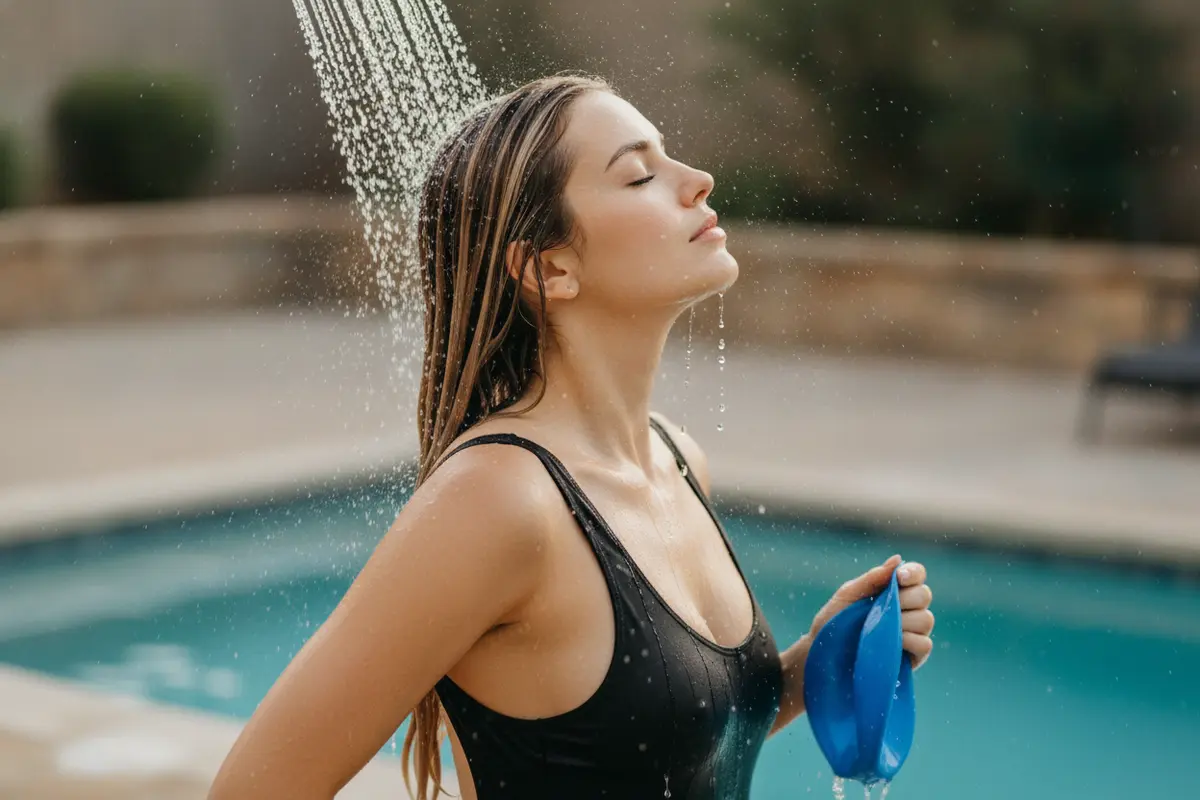
Before a swim, try this short routine:
Wet your hair thoroughly with clean, cool water.
Gently squeeze out excess water instead of roughing up the hair with a towel.
If appropriate for your product and swimming setting, apply conditioner as directed.
Put on a swim cap if you are comfortable wearing one.
Bring a towel and a comb with wide, spaced teeth for after your swim.
Keep the routine realistic. If you are swimming for a short time, pre-wetting and rinsing afterward may be the steps you can repeat most consistently. If you swim often, a cap and a plan for prompt rinsing can make your routine more manageable.
How should you care for your hair after swimming?
Rinse your hair with clean water as soon as you can after leaving the water. This removes residue from the surface before it has more time to sit in the hair. If you cannot shower immediately, use a clean-water rinse when one is available, then wash and condition when you get home.
Be gentle while hair is wet. Blot or squeeze out water rather than rubbing with a towel, and detangle carefully from the ends upward. Use a conditioner suited to your hair, and avoid adding unnecessary heat if your hair already feels dry. You do not need to shampoo after every brief swim automatically; choose based on how your hair feels, what it was exposed to, and your usual wash routine. If you do shampoo, use a product appropriate for color-treated hair and follow its directions.

Notice how your hair responds over several swims. Is it tangling more, feeling rough, or seeming dull sooner than usual? Those observations can help you adjust the routine. For general background on how different color approaches are planned, Dolce Salon’s hair color guide is a useful starting point. Your own stylist can help narrow down what makes sense for your color and hair condition.
Which swimming-care options make sense for you?
The best approach depends on how often you swim, whether you swim in a pool or salt water, and how much time you have to prepare and rinse. Use this comparison to choose a starting point, not as a promise that any one step will prevent all color changes.
Option | What it helps with | Best fit | What to keep in mind |
Pre-wet with clean water | Can reduce how much pool or salt water the hair absorbs | Nearly any swim when a rinse is available | It is a helpful first step, not a complete barrier |
Wear a swim cap | Adds a physical layer between hair and water | Frequent swimmers or anyone comfortable wearing one | Some water may still get under or around the cap |
Condition before swimming | Can help coat and smooth the hair, depending on the product | When product use is suitable and allowed | Follow product directions and facility rules |
Rinse promptly afterward | Washes away water and residue from the hair | Every swimmer, especially after pool or salt water | Use clean water; wash and condition as needed |
Ask a stylist about maintenance | Helps align care choices with your color and hair condition | Color shifts, dryness, frequent swimming, or a planned color change | Recommendations depend on your service and goals |
Think about these options as layers rather than an all-or-nothing checklist. On an occasional swim day, clean-water pre-wetting and a prompt rinse may be the easiest steps to remember. If you swim several times a week, decide in advance where you will rinse, keep a cap and towel in your bag, and make after-swim conditioning part of the routine that already works for you. A repeatable routine is usually easier to maintain than adding many products or steps at once.
Pool and salt water call for the same basic habit of rinsing, but your experience may differ. A pool swimmer might be most concerned about how hair feels after repeated exposure to chlorinated water. After ocean swimming, you may notice salt residue or more tangling. Pay attention to your own hair rather than relying on a strict rule based only on the type of water. If your hair seems to be reacting, note the circumstances and talk them through with a stylist.
It also helps to separate immediate care from color maintenance. Rinsing after a swim is an at-home step; a color appointment is a separate decision based on your goals, hair condition, and timing. A salon service cannot replace the everyday care you choose between visits, and a home routine cannot customize a color formula. If you are unsure which concern to address first, describe both: what you notice after swimming and what you hope your color will look like.
How can you plan color maintenance around swimming?
Try to consider your swimming schedule when you plan a color appointment. If you have a significant event or an upcoming stretch of frequent swims, mention it during your consultation. Your stylist can discuss your desired result, your current hair condition, and how much maintenance fits your routine. Honest guidance matters: the right plan should account for what you can realistically do between visits.
Color needs differ. Some people want a noticeable change and are comfortable with more upkeep. Others prefer a softer grow-out or a lower-maintenance approach. If your color seems to fade or shift after swimming, explain what you notice and how often you swim rather than assuming one particular service is needed. Dolce Salon describes its first-visit approach as a consultation focused on hair goals, lifestyle, maintenance, and a customized formula. You can review the salon’s hair color services and discuss what may suit your situation.
Ask questions that make the plan concrete. For example: “How should I adjust my home routine on swim days?” “What should I do if my hair feels dry after a swim?” “Would my preferred color require more upkeep if I swim several times a week?” Those questions leave room for advice based on your hair rather than a blanket rule.
When should you ask a stylist for help?
Consider getting personalized advice if your hair feels persistently rough, tangles more than usual, or your color changes in a way you do not like. It is also sensible to ask before making a major color change if you swim frequently. A consultation can clarify what result is realistic, what care may be involved, and how your lifestyle affects the plan.
Bring a clear description of your routine: pool or salt water, approximate swim frequency, whether you wear a cap, and what you use to rinse and wash. If possible, note when you last had your color done and what has changed since then. Those details help your stylist understand the full picture. If you are new to the salon, Dolce’s new-client information can help you prepare for a first visit.
For a color refresh or a question about tone, a stylist may also explain whether a toner is relevant to your goals. It is not a universal fix for swimming-related changes. Read more about what hair toner does, then discuss your particular situation before choosing a service.
Frequently Asked Questions
Does wetting hair before swimming really help?
It can help hair absorb less chlorine or salt water, according to the University of Alabama at Birmingham. Wetting hair is a practical first step, but it does not make hair fully water-resistant. Pair it with a rinse after swimming and other steps that fit your routine.
Is a swim cap enough to protect colored hair?
A cap can provide another layer, but it may not keep all water away from your hair. Fit, movement, and the cap style can affect how much water reaches the hair. Use it along with pre-wetting and a prompt rinse rather than treating it as a guarantee.
Should I shampoo after every swim?
There is not one rule for everyone. Consider the type and length of your swim, how your hair feels, and your normal wash routine. When you do shampoo, choose a product appropriate for color-treated hair and condition afterward as needed.
Can I swim soon after a color appointment?
Ask your colorist, because timing advice can depend on the service and products used. Mention your planned swim when you book or at your appointment so the stylist can give guidance specific to your color plan.
What is the most important step after swimming?
Rinse with clean water as soon as practical. Then handle wet hair gently and use conditioner suited to your needs. If you notice ongoing dryness or a change in tone, ask a stylist to help you adjust your care plan.
With a repeatable pre-swim and post-swim routine, you can enjoy the water while making thoughtful choices for colored hair. If your needs change, bring your swimming habits and color goals to a Tacoma stylist and build a care plan that feels workable for you.



Comments