

Tape-In Hair Extensions Guide: Before You Book
Updated: 6 days ago
If you are considering added length or fullness, this tape-in hair extensions guide will help you decide what to expect before you book. Tape-ins are a flat, flexible option, but the best result starts with a professional consultation, an honest look at your natural hair, and a maintenance plan you can keep. For the bigger picture on methods, costs, and what to expect in Tacoma, read our complete Tacoma hair extensions guide first.
What Are Tape-In Hair Extensions?
Tape-in hair extensions are thin wefts attached to small sections of natural hair with adhesive tabs. A second weft is placed against the first, creating a flat sandwich around the natural hair. At Dolce Salon, tape-in extensions generally stay in place for 4 to 6 weeks, depending on hair growth, and can be removed, retaped, and reinstalled 2 to 3 times.
Why people choose tape-ins
The appeal is the combination of a flat attachment and a relatively short salon maintenance cycle. Tape-ins can add length, fullness, or both without the visible bulk some clients associate with larger attachment points. They are also a practical choice for someone who wants a semi-permanent result rather than taking extensions out every night.
Flat wefts can blend discreetly beneath the top layer of hair.
They can add fullness without requiring a full transformation.
The hair can be removed and retaped when the natural hair grows out.
A consultation helps determine the right color, placement, and amount of hair.
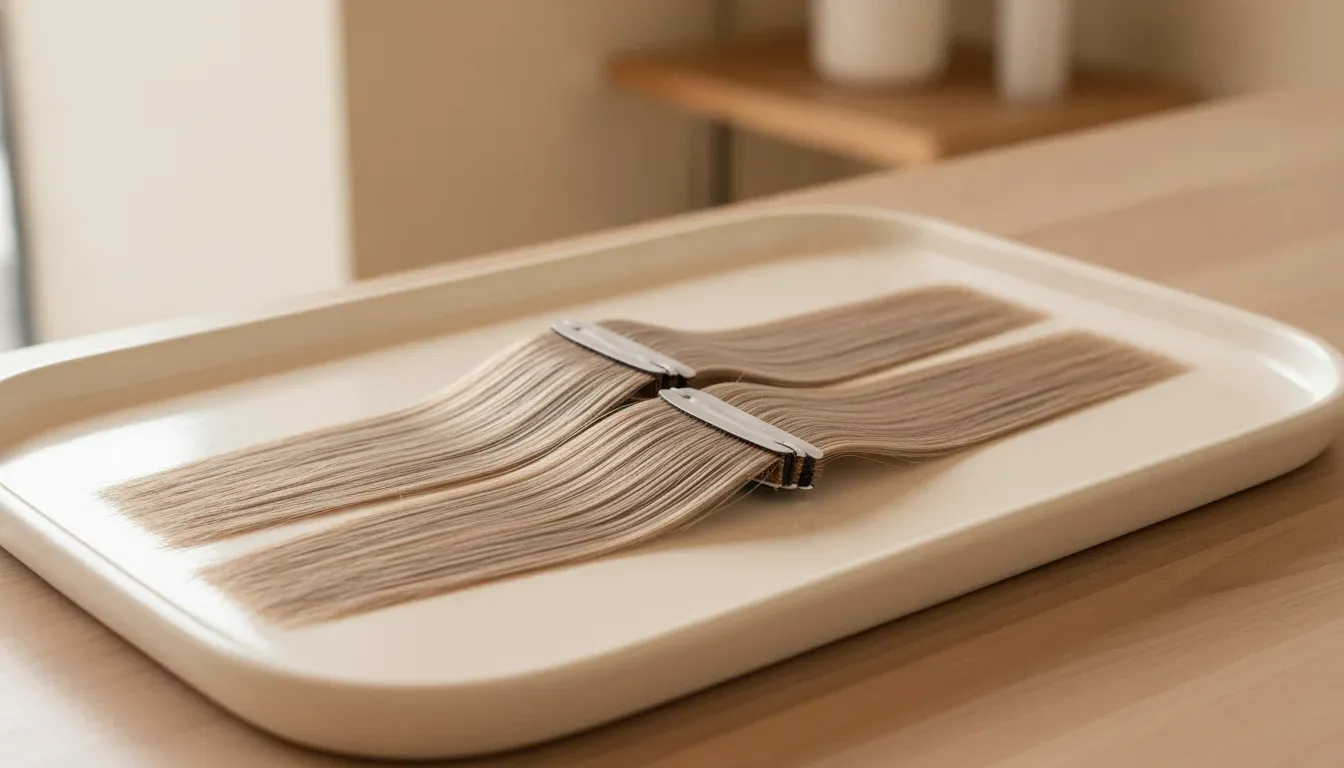
Tape-in wefts are designed to lie flat when the correct section of natural hair is placed between them.
Tape-ins are not a one-size-fits-all service
Hair density, texture, length, condition, color, and your everyday routine all matter. A stylist may recommend a different method if tape-ins do not suit your hair or your preferred maintenance schedule. Dolce Salon offers four extension methods: Tape-In, Cold Fusion, Handtied, and Hot Fusion. Comparing all four is useful, but your consultation should focus on the method that supports your actual hair goals.
How Are Tape-In Extensions Applied?
A professional tape-in application begins with a consultation and a color match, followed by clean sectioning and careful placement. The stylist chooses sections that can support the wefts, places one extension beneath the natural hair, and sandwiches it with another weft. The attachment should feel secure and comfortable, never painful or excessively tight.
1. Consultation and preparation
First, the stylist reviews your goals, current hair condition, desired fullness, length, texture, and routine. This is also when you can discuss workouts, swimming, heat styling, color appointments, and how often you can return for maintenance. For first-time extension clients, Dolce Salon requires a consultation before booking the extension appointment. The consultation confirms candidacy, color matching, and what hair needs to be ordered.
2. Sectioning and placement
For the application, hair is clean, dry, and free of buildup that could interfere with adhesion. The stylist works in horizontal sections, usually beginning low and moving upward. Each section must be small enough for the tape to lie flat, but not so small that the attachment carries too much weight. Placement is adjusted around the hairline, part, and crown so the wefts remain comfortable and discreet.
3. Sandwiching and blending
One tape-in weft is placed under a thin section of natural hair and the matching weft is pressed over the top. The stylist then checks the bond, repeats the pattern, and blends the added hair with a cut or styling plan when appropriate. The final look should move with your natural hair instead of creating a sharp shelf or visible attachment line.
Application question | What to expect |
Will the tape be visible? | Correct color matching and placement help the flat wefts blend beneath the top layer. |
Can I choose the amount of hair? | Your stylist selects the amount and placement based on density, goals, and the finished blend. |
Can I book an extension appointment first? | First-time clients should complete a consultation before the extension service is booked. |
Is a quote available online? | Extension pricing requires a consultation because hair, method, quantity, and stylist level affect the plan. |
Because extension services are customized, Dolce Salon does not present one universal tape-in price. The salon uses a tiered stylist system, and the consultation provides a service plan and quote based on your needs. You can review the current Dolce Salon extension services before your visit, then bring questions about maintenance and investment to the consultation.
How Long Do Tape-In Hair Extensions Last?
Tape-in extensions at Dolce Salon typically stay in for 4 to 6 weeks before they need to be removed and moved up. The exact timing depends on how quickly your natural hair grows, your hair type, daily habits, and how consistently you follow care instructions. The extension hair may be retaped and reinstalled 2 to 3 times when it remains in good condition.
Signs it is time for a move-up
Do not wait for an attachment to become uncomfortable or difficult to manage. Contact your salon when the wefts have grown noticeably away from the scalp, begin to show through the top layer, tangle near the attachment, or no longer sit securely. A timely maintenance appointment allows the stylist to assess the hair, remove the wefts carefully, replace the adhesive, and reinstall them closer to the scalp.
Book the maintenance visit around the 4 to 6 week point recommended for your hair.
Have the stylist inspect the attachment and your natural hair at every visit.
Replace worn tape rather than trying to make a loose bond last longer.
Ask whether the extension hair is still suitable for another installation.
What shortens the wear period?
Heavy product buildup, oil near the tape, rough brushing, sleeping with wet hair, frequent high heat, and pulling at the attachments can all make extensions harder to manage. Your own routine matters more than a calendar promise. Your stylist can adjust the placement and care plan for your texture, activity level, and preferred finish.
Are Tape-In Extensions Safe for Fine or Damaged Hair?
Tape-ins can be suitable for some fine hair, but no extension method is automatically safe for every head of hair. Candidacy depends on the strength, density, and condition of your natural hair, as well as the amount of extension hair and the placement. A professional must evaluate those factors before recommending an application.
Fine hair needs a lighter, more precise plan
Fine or thin hair may benefit from smaller, carefully spaced sections and a conservative amount of added hair. The goal is a balanced result, not the maximum amount of length at any cost. A stylist should avoid placing weight on fragile edges, very short sections, or hair that cannot support a flat attachment. If your hair is actively breaking or shedding, ask whether waiting or choosing another service is the better option.
Damaged hair may need recovery first
Hair that is highly porous, severely overprocessed, or breaking may not be a good candidate right away. Extensions can add stress when they are too heavy, too tight, or left in beyond the recommended maintenance window. The American Academy of Dermatology advises professional application and attention to pain, tightness, and hair health because repeated pulling can contribute to breakage and hair loss.
Tell your stylist about recent lightening, chemical services, scalp sensitivity, and any unusual shedding. You should not have to tolerate pain, a headache, persistent soreness, or a pulling sensation to wear extensions. Speak up during the appointment so the placement can be adjusted. If you are concerned about hair loss or scalp changes, consult a board-certified dermatologist.
How to Care for Tape-In Extensions Between Salon Visits
Good tape-in care protects both the attachment and your natural hair. Keep the bond area clean and dry, brush gently from the ends upward, and keep conditioner, oils, and heavy styling products away from the tape. Use the product and washing routine recommended for your hair, and schedule a move-up before grown-out attachments begin to tangle.

A gentle brush, careful detangling, and a consistent routine make between-visit care easier.
Your daily routine
Detangle from the ends upward with a brush suited to extensions.
Support the hair near the attachments when brushing or styling.
Keep conditioner, masks, oils, and leave-in products off the tape.
Dry the roots and attachment area thoroughly after washing.
Use heat protection and keep hot tools away from the tape.
Sleep with hair gently secured so it does not mat or pull overnight.
Before your next salon visit
Bring a clear picture of what you want to maintain or change, and mention any slipping, tangling, discomfort, or change in your routine. A maintenance appointment is also a good time to reassess color, length, fullness, and whether the existing hair can be retaped again. Your extension plan should change as your natural hair and lifestyle change.
For a first visit, review the Dolce Salon new-client process, including the hair questionnaire and photo request. The team can use that information to prepare for a more productive consultation. Dolce Salon is located at 3835 6th Ave in Tacoma, with convenient parking and a consultation-first approach for clients who want a clear plan before committing.
Frequently Asked Questions
How often do tape-in extensions need to be moved up?
Most Dolce Salon tape-in clients return every 4 to 6 weeks, depending on natural hair growth and how the extensions are wearing. Your stylist will check the attachments and recommend the right timing rather than relying on a fixed date.
Can tape-in extensions be reused?
Yes. Dolce Salon describes tape-in extensions as removable, retapeable, and reinstallable 2 to 3 times when the extension hair remains in good condition. The adhesive is replaced during maintenance, and the stylist checks whether the hair is ready for another installation.
Are tape-in extensions a good choice for thin hair?
They may be, but suitability depends on density, strength, condition, and placement. Fine hair often needs a conservative amount of hair and careful spacing. A consultation is the safest way to decide whether tape-ins support your goals or whether another method is more appropriate.
Can I wash and style my hair with tape-ins?
Yes, but you need a gentle routine. Brush from the ends upward, keep conditioner and oils away from the tape, dry the attachment area thoroughly, and use heat protection. Your stylist can recommend products and techniques based on your hair and the extension hair.
How do I know if tape-ins are too tight?
Pain, a headache, persistent soreness, or a strong pulling sensation are warning signs. Tell your stylist immediately so the placement can be assessed and adjusted. Do not wait for discomfort to resolve on its own, especially around the hairline or edges.
Tape-in extensions can be a beautiful, flexible option when the method, amount, placement, and maintenance schedule are chosen for your natural hair. Start with a consultation at Dolce Salon in Tacoma so you can ask informed questions, receive a personalized plan, and decide whether tape-ins are the right fit before you book the full service.


Comments