

How to Care for Hair Extensions by Method
Knowing how to care for hair extensions starts with the method attached to your hair. Tape-In, Handtied, Cold Fusion, and Hot Fusion extensions all benefit from gentle brushing, careful washing, controlled heat, and professional maintenance, but their attachment points need different handling. Begin with our Hair Extensions in Tacoma guide for the broader method overview, then use these aftercare tips to protect your style between visits.
Book a hair extension consultation with Dolce Salon for a method-specific care plan.
How to Care for Hair Extensions With a Daily Routine
The safest daily routine is gentle, consistent, and tailored to your installation. Brush from the ends upward, keep rich products away from attachment points, dry the hair completely, and avoid repeated pulling at the roots. Your stylist's instructions should take priority because hair texture, density, growth rate, and lifestyle all affect extension care.
Build a low-tension routine between washes
Extension care is easier when you prevent small tangles from becoming tight knots. Before getting dressed, separate the hair with your fingers and check the nape, behind the ears, and around each attachment. These areas experience the most friction from collars, scarves, pillowcases, and movement. A few gentle passes with an extension-safe brush are better than waiting several days and trying to force a large knot apart.
At night, make sure the hair is fully dry and gather it into a loose braid or low ponytail if your stylist approves. The style should feel secure without pulling at one area. Avoid sleeping with a tight bun, a wet foundation, or clips placed directly over tape, beads, wefts, or bonds. If you wear your hair up during the day, change the placement occasionally so the same roots are not carrying tension every time.
Brush from the ends upward
Separate the hair into manageable sections before brushing. Hold the hair above the attachment with one hand so the brush is not pulling directly on the root. Start at the ends, work through the mid-lengths, and then smooth the full length. Use an extension-safe brush or a wide-tooth comb recommended for your method.
Take extra care when the hair is damp. Extensions can feel heavier when wet, which may increase tension at the root. Blot with a soft towel instead of rubbing or twisting, and never pull through a knot. If tangling keeps returning at the base, contact your stylist rather than cutting, pulling, or repairing the attachment at home.
Wash, condition, and dry with control
Wash as often as your scalp and lifestyle require. Gently detangle the lengths first, then use lukewarm water and work shampoo through the scalp with your fingertips. Let the lather rinse through the lengths instead of piling all the hair on top of your head. Apply conditioner mainly from the mid-lengths to the ends, keeping it away from attachments unless your stylist gives different instructions.
After washing, squeeze out excess water and dry the roots and attachment areas fully. Use a heat protectant approved for your extensions, keep the dryer moving, and direct airflow down the hair. Do not clamp a flat iron or curling iron over tape, beads, wefts, or bonds. Dry hair before bed; a loose braid or low ponytail can reduce overnight tangling without creating tight tension.
Tape-In Extension Maintenance Tips
Tape-In extensions use flat panels that sandwich a section of natural hair. Dolce Salon's service information says this method generally stays in for about 4 to 6 weeks, depending on hair growth. The extensions can then be removed, retaped, and placed back by a professional, sometimes two or three times.
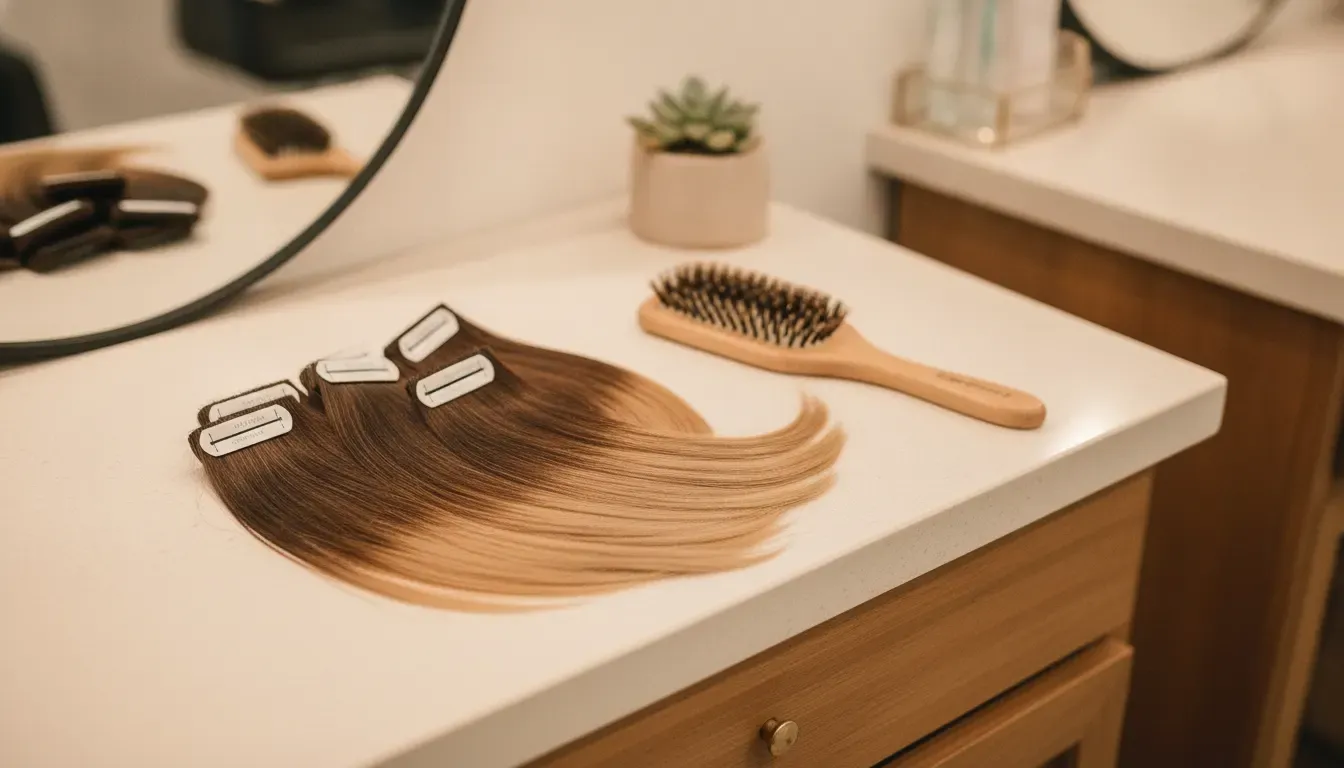
Tape-In care starts with light brushing and keeping rich products away from the adhesive panels.
Protect the adhesive panels
Support the hair near each panel before brushing.
Start at the ends and move upward in short sections.
Keep conditioner, masks, oils, and heavy leave-ins away from the adhesive unless your stylist approves them.
Dry the roots and panels completely after washing.
Contact your stylist if a panel slips, tangles, feels painful, or becomes visible.
Do not press a slipping panel back into place or add product to make it feel secure. A professional needs to decide whether the extension should be checked, removed, or retaped. At Dolce Salon's convenient 6th Avenue location in Tacoma, our team can review your routine and recommend products that suit your installation.
Schedule Tape-In maintenance with Dolce Salon before slipping becomes a larger detangling problem.
Handtied and Fusion Extension Maintenance Tips
Handtied, Cold Fusion, and Hot Fusion extensions add length or fullness through different attachment systems. The same basic habits apply: support the attachment while brushing, keep the area clean and dry, limit direct heat, and leave removal or adjustment to a professional. See the Tacoma hair extensions methods guide when you need help comparing the installation options themselves.
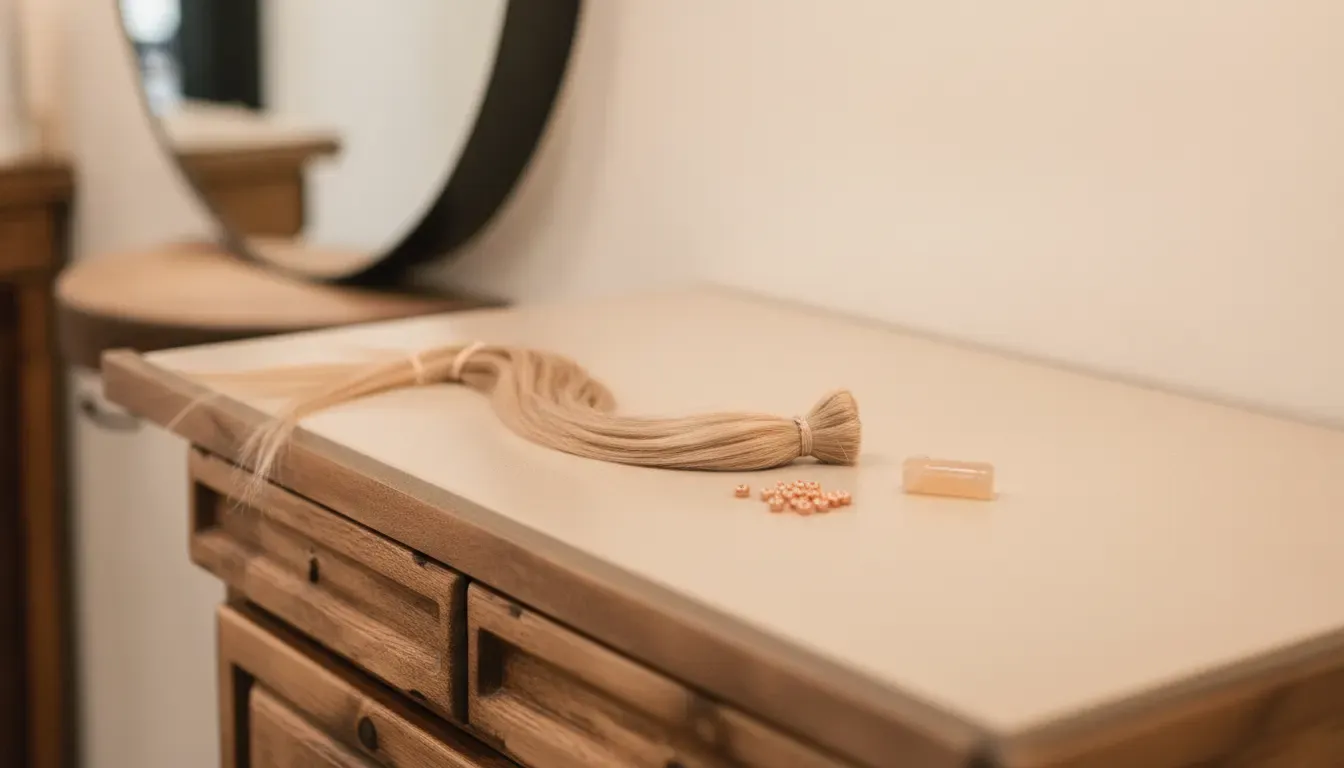
Handtied, Cold Fusion, and Hot Fusion attachments each need a method-specific maintenance plan.
Method | Dolce Salon method detail | Care priority |
Handtied | A weft is sewn into a foundation made with copper tubes and natural hair. | Brush gently at the foundation, dry the row fully, and prevent tangling where the weft meets your natural hair. |
Cold Fusion | Copper tubes with a silicone lining connect the extension to your hair. | Use a light touch around the tubes and do not slide or remove them at home. |
Hot Fusion | A keratin adhesive tip is applied to your hair. | Keep direct heat and rich products away from the keratin bonds. |
Handtied extensions
Dolce Salon says Handtied extensions generally last about 8 weeks before the hair is taken out and redone with the same hair. Separate the hair gently at the foundation so loose strands do not wrap around the weft. Support the row when brushing the lengths, avoid tight ponytails that pull on one section, and do not cut, sew, tighten, or remove the weft yourself.
When washing a Handtied installation, use your fingertips to clean the scalp without scrubbing the weft aggressively. Rinse until the water runs clear, then blot the lengths and begin drying at the foundation. Move the dryer continuously and direct air downward. Once the row is dry, check that no strands are crossing over the weft or gathering into a tight section. Early attention makes professional maintenance more comfortable and helps your stylist see the row clearly.
Cold Fusion extensions
Dolce Salon lists Cold Fusion extensions at about 2 to 3 months in the hair, with the hair usually not reused. Brush around each tube with a light hand and watch for tangling at the base. Keep conditioner and oils away from the attachment area unless your stylist recommends a specific product and placement.
Cold Fusion tubes should stay aligned and comfortable as the hair grows. Do not slide a tube down the strand, squeeze it with household tools, or try to replace it yourself. When you section the hair, use small movements and support the area near the tubes. Tell your stylist if a tube becomes visible, rotates, catches on your brush, or creates a persistent tangle.
Hot Fusion extensions
Dolce Salon lists Hot Fusion extensions at about 2 to 3 months, with the hair not reusable. Keep direct heat away from the keratin bonds and dry the bond area fully before sleeping. If a bond feels loose, do not pull it or use a household adhesive remover. Ask a professional to assess it.
Use the same care around Hot Fusion bonds when styling. Divide the hair into sections, keep hot tools on the lengths, and leave space around each bond rather than clamping over it. A heat protectant belongs on the lengths when appropriate, but it should not replace careful tool placement. If the hair starts matting near a bond, stop brushing harder and ask for help before the issue spreads.
Which Products and Styling Habits Should You Avoid?
Extension care is not about avoiding moisture or styling altogether. It is about keeping rich, slippery, or high-heat products away from attachment zones while giving the lengths the hydration they need. Ask your stylist which products fit your method and natural hair.
Keep oils, rich masks, thick leave-ins, and root conditioners away from Tape-In panels, wefts, tubes, and keratin tips unless approved.
Rinse thoroughly so residue does not collect around attachment points.
Apply conditioner and approved moisturizing products from the mid-lengths through the ends.
Use heat protection and keep hot tools moving on the lengths.
Avoid repeatedly tight ponytails, buns, or braids that pull at the same roots.
Do not apply bleach, color, relaxers, or other chemical services at home over your extensions.
If your roots become sticky, unusually heavy, tangled, or difficult to brush after washing. Bring that concern to your stylist instead of layering on more dry shampoo or oil. The right product is only part of the solution. Placement, amount, water temperature, drying technique, and the condition of your natural hair all affect how an extension installation behaves. Keep a short note of what you used and what changed if a new product seems to cause buildup or slipping. That information gives your stylist a useful starting point for adjusting your routine.
How Often Should You Visit the Salon for Extension Maintenance?
Your maintenance schedule depends on the method, hair growth, density, daily activity, and the instructions given at installation. Dolce Salon's published guidance lists about 4 to 6 weeks for Tape-In. About 8 weeks for Handtied, and about 2 to 3 months for Cold Fusion and Hot Fusion. These are method guidelines, not a substitute for an assessment of your hair.
Book sooner if you notice slipping, matting, visible attachments, persistent root tangling, uneven tension, or scalp discomfort. Pain or a headache can mean a style is too tight, according to the American Academy of Dermatology Association's extension safety guidance. For medical background on prolonged tension and hair loss, see the NCBI Bookshelf reference on traction alopecia.
A maintenance visit also gives your stylist a chance to check your natural hair, address early tangling, and adjust your home-care plan. If your lifestyle changes because of swimming, frequent workouts, travel, or more heat styling, tell your stylist so the plan reflects your real routine. A schedule that worked during a quiet month may need to change when you wash more often. Wear helmets, spend time in chlorinated water, or keep your hair up for work. If you are unsure what to book, Dolce Salon's new client consultation information explains how a consultation can clarify your service and maintenance needs.
Book your next extension maintenance visit at Dolce Salon in Tacoma before attachment issues become harder to manage.
Frequently Asked Questions
Can I sleep with wet hair extensions?
It is best to dry the hair and attachment areas completely before bed. Sleeping on wet hair can increase tangling. Gently detangle, dry the roots and attachments, and use a loose braid or low ponytail if your stylist recommends one.
Can I swim with hair extensions?
Ask your stylist for a method-specific plan before swimming. Water, friction, and repeated tying can increase tangling or affect some attachments. If you swim, secure the hair gently, follow your stylist's product instructions, and rinse and dry it carefully afterward.
What should I do if my extensions feel tight or painful?
Contact your stylist promptly. Do not wait for pain, tenderness, or visible breakage to become severe, and do not try to loosen or remove the attachment yourself. Your stylist can decide whether it needs an adjustment or professional removal.
Can I remove hair extensions at home?
Professional removal is the safer choice. Tape, copper tubes, sewn wefts, and keratin bonds each require a different process. Pulling at an attachment or using an unapproved remover can stress your natural hair.
How do I know which maintenance schedule is right for me?
Start with the method's typical timing, then adjust for growth rate, density, wash routine, exercise, swimming, and styling habits. A Dolce Salon consultation can connect those details to a practical plan for your hair goals.


Comments