

Best Hair Extensions for Fine, Thin Hair
If you have fine or thin hair, the best hair extensions for fine thin hair are the lightest method that can meet your goal without creating excess weight or tension. In many consultations, that means comparing Tape-In and Hand-Tied extensions based on your density, desired volume, lifestyle, and maintenance plan, not choosing a method from a checklist. Start with Dolce Salon's hair extensions in Tacoma methods and costs guide for the broader picture, then use this guide to narrow the decision.
Book a hair extension consultation with Dolce Salon to discuss your hair goals, color match, and the method that fits your natural hair.
Why Fine Hair Requires a Gentler Extension Method
Fine hair describes the diameter of each strand. Thin hair usually describes overall density, or how much hair is present. You can have fine strands with plenty of density, thin hair with coarse strands, or both fine strands and lower density. That distinction matters because an extension plan has to support the hair you actually have, rather than the hair you wish you had.
For fine or thin hair, a good extension plan should focus on:
Low bulk at the attachment point
Balanced weight across an appropriate section of natural hair
A realistic amount of added length or volume
Attachments that can be hidden without stressing the hairline
A maintenance schedule you can consistently follow
The right answer is not simply the method that feels lightest in a product photo. A stylist needs to assess density, texture, previous color or chemical services, scalp comfort, and the condition of the ends. If your hair is actively breaking, shedding, or painful at the scalp, extensions may not be the first step. The American Academy of Dermatology advises professional application and says pain or a headache can signal that a style is too tight. Its guidance on preventing damage from weaves and extensions is a useful safety reference.
Are Tape-In Extensions Good for Fine Hair?
Short answer: Tape-In extensions can be a strong option for fine hair when a stylist selects an appropriate amount of hair and places the flat attachments where they can be supported and concealed. Their slim, sandwiched design can create a smooth result, but the adhesive, placement, maintenance, and removal all matter.
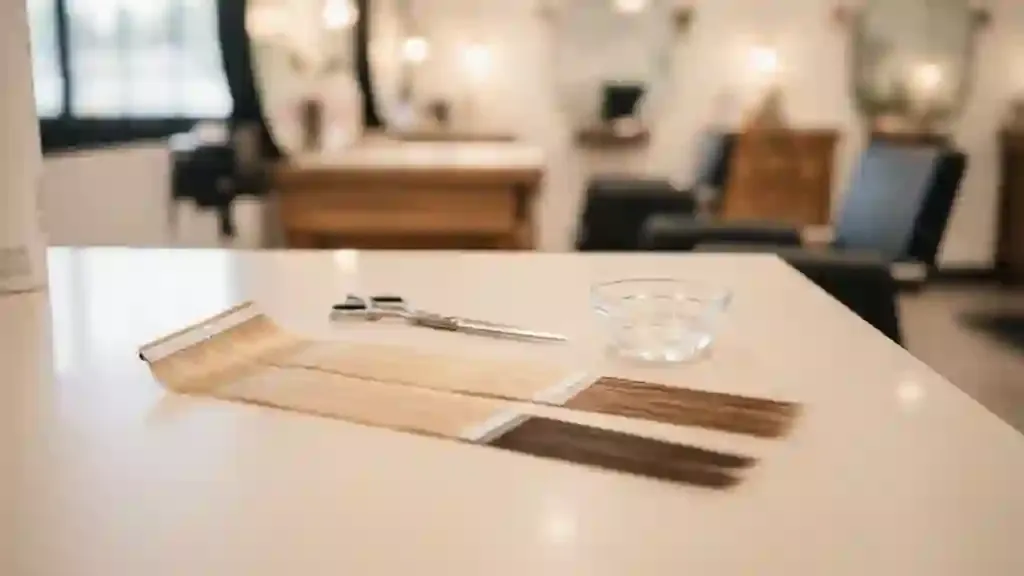
Tape-In extensions are designed to lie flat, which can help create a discreet blend when the placement and amount are right for your density.
Potential benefits of Tape-In extensions
Flat attachments can be discreet under the right sections of hair.
They can add targeted fullness without requiring a full head of extensions.
Dolce Salon's service information says Tape-In extensions generally stay in for about 4 to 6 weeks, depending on growth.
The hair can be removed, retaped, and put back in place. Dolce notes that this may be possible two or three times.
What to consider before choosing Tape-In extensions
Adhesive panels need enough natural hair to support them and enough coverage to hide them.
As the hair grows, the attachment can become more visible or harder to style.
Removal and retaping require a careful professional process. Do not pull or peel the panels off at home.
If you have a very delicate hairline or sparse areas, your stylist may recommend a different placement or method.
Tape-In extensions may suit someone who wants a flat, blended look and is comfortable returning for regular maintenance. They are not automatically the best choice for every person with fine hair, and using fewer, lighter panels may be more appropriate than trying to create maximum length.
Are Hand-Tied Extensions Good for Fine or Thin Hair?
Short answer: Hand-Tied extensions can suit fine or thin hair when the foundation, row placement, and amount of hair are customized carefully. Instead of adhesive panels, Dolce Salon describes a foundation made with copper tubes and natural hair, followed by a sewn weft. That row-based design can add volume, but it still needs enough supporting hair and an appropriate weight.
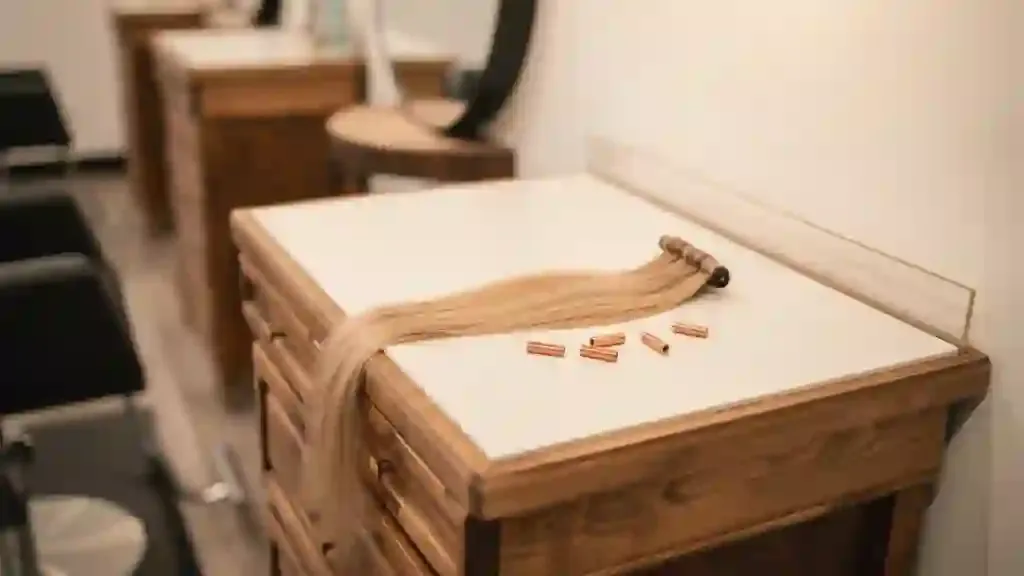
A Hand-Tied extension plan begins with a carefully built foundation and a weft selected for the client's density and desired fullness.
Potential benefits of Hand-Tied extensions
A weft can create noticeable fullness across a row rather than relying on many small attachment points.
The same hair may be removed and redone during maintenance, according to Dolce Salon's service description.
They can be customized for clients who want volume and movement instead of a very flat attachment.
Dolce Salon lists approximately 8 weeks as a typical time before the hair is taken out and redone.
What to consider before choosing Hand-Tied extensions
A row can be visible if the placement, color match, haircut, or density is not customized well.
Very thin areas may not have enough natural hair to support a weft safely.
Added length increases the total weight, so a shorter or lighter plan may be more suitable.
Maintenance is part of the method. Waiting too long can change how the row sits and feels.
Hand-Tied extensions may be a good fit when the primary goal is fuller-looking hair and the client has enough density for a carefully sized row. A consultation should decide how much hair to use, where to place it, and whether the result should focus on volume, length, or a combination of both.
Which Method Is Best for Fine or Thin Hair?
There is no universal winner. Tape-In extensions may be the better starting point when you want a flat, discreet addition and your hair can support adhesive panels. Hand-Tied extensions may be the better fit when you want row-based volume and have enough density for a lightweight, well-supported foundation.
What matters most | Tape-In | Hand-Tied |
Attachment approach | Flat panels are sandwiched around natural hair. | A copper-tube foundation supports a sewn weft. |
Often considered for | Discreet fullness and a smooth, flat blend. | Row-based volume and added movement. |
Dolce Salon's listed maintenance timing | About 4 to 6 weeks, depending on growth. | About 8 weeks before removal and redo. |
Main consultation question | Can the panels be supported and concealed? | Can the row be sized and supported without excess tension? |
The best method is the one that balances your natural density, comfort, desired change, and ability to maintain it. Dolce Salon offers four extension methods, including Tape-In, Cold Fusion, Hand-Tied, and Hot Fusion. Your consultation can also consider whether a different method, a smaller amount of hair, or a shorter length would create a more natural result.
Which Methods Should You Avoid If You Have Fine Hair?
It is more useful to ask which methods and installation choices may be inappropriate for your current hair than to label an entire method unsafe. Cold Fusion uses copper tubes with a silicone lining and is listed by Dolce Salon as staying in for about 2 to 3 months. Hot Fusion uses a keratin adhesive and is also listed at about 2 to 3 months, with the hair usually not reusable. Either may be considered in some situations, but neither should be chosen without a density, condition, and lifestyle assessment.
Be cautious about any extension plan that:
Feels painful, pinches, or causes a headache
Creates obvious pulling at the hairline or temples
Uses more length or hair than your natural density can support
Requires you to delay maintenance beyond the stylist's instructions
Promises a dramatic transformation without discussing your current hair condition
Repeated tension can contribute to breakage and traction-related hair loss. The American Academy of Dermatology recommends removing a style immediately if it causes pain or scalp irritation and giving natural hair breaks from extension styles. For more clinical background, see this review of traction alopecia in the National Library of Medicine's PubMed Central. A salon consultation is not a medical diagnosis, so speak with a board-certified dermatologist about ongoing shedding, scalp pain, or sudden hair loss.
How Should You Prepare Fine Hair for Extensions?
Preparation helps your stylist make a safer and more realistic recommendation. Before your consultation, think about these questions:
Do you want volume, length, fullness around the face, or all three?
How often do you wash, exercise, swim, heat-style, or wear your hair up?
Have you experienced breakage, shedding, scalp sensitivity, or a recent color or chemical service?
Can you return for the maintenance schedule your chosen method requires?
Would a modest change look and feel more natural than the maximum amount of hair?
Bring clear inspiration photos, but also bring realistic expectations. At Dolce Salon, first-time extension clients book a consultation before the extension appointment so the team can assess candidacy, color match, and order the hair. Visit the new-client extension information and services page for the salon's current method descriptions. Dolce's tiered stylist system also gives clients a transparent way to discuss the level of experience that fits their needs.
Questions to Ask Before You Choose Hair Extensions
What are the best hair extensions for fine thin hair?
The best option is the lightest method that your stylist can support and conceal safely. Tape-In and Hand-Tied extensions are common options to compare, but density, condition, desired result, and maintenance schedule decide the recommendation.
Are Tape-In extensions less damaging than other methods?
Flat Tape-In panels may be comfortable when correctly sized, placed, maintained, and removed. No extension method is risk-free if it creates excessive tension, and pain or scalp irritation is a reason to contact your stylist promptly.
Can thin hair wear Hand-Tied extensions?
Some clients with thin hair can wear a customized Hand-Tied plan, while others may not have enough supporting density for a row. A consultation should determine the foundation, row size, length, and amount of hair.
How do I know if extensions are too tight?
Pain, pinching, a headache, scalp irritation, or visible pulling are warning signs. Tell your stylist immediately so the placement can be assessed. If symptoms continue or you notice hair loss, consult a dermatologist.
Do I need a consultation before booking extensions at Dolce Salon?
Yes. Dolce Salon's new-client guidance says first-time extension clients should book a consultation first for candidacy, color matching, and hair ordering. The salon is located on 6th Avenue in Tacoma with accessible parking.
Book online with Dolce Salon to talk through your fine or thin hair, desired result, and extension options.


Comments